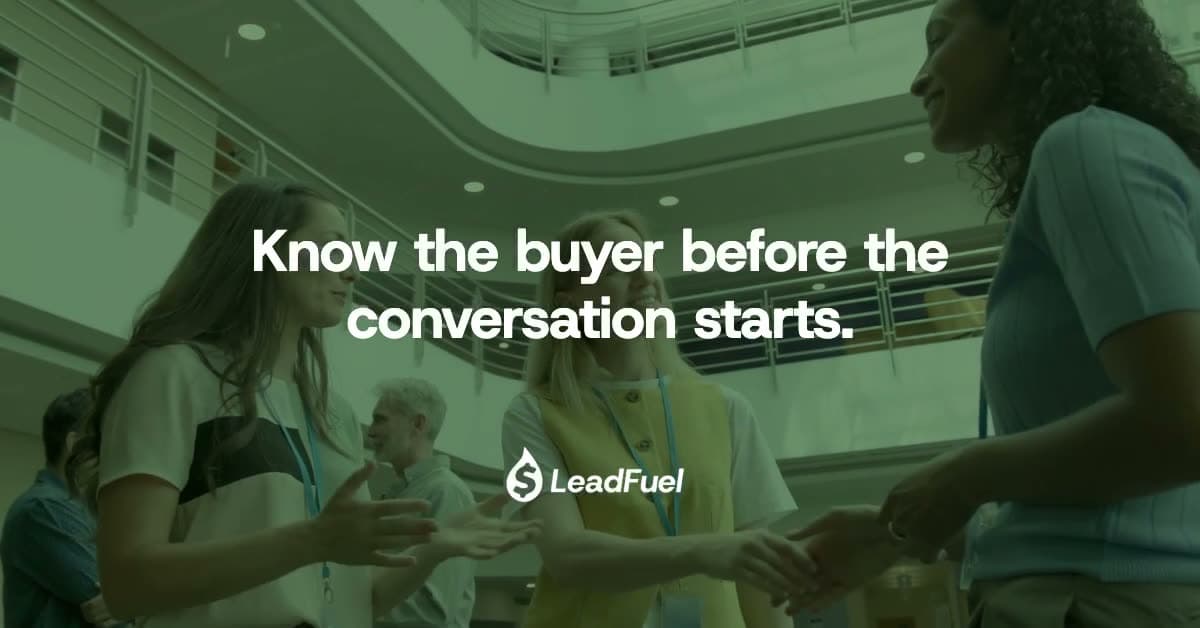
It happens all day at a busy trade show. Someone walks into the booth, their name, title, and company right there on their badge. But your rep doesn't really know who they are.
Is this someone from a target account? Has another salesperson already been talking to them? Are they already a customer?
There's no time to find out. The person is standing there waiting, so your rep does what any good rep would do. They start talking.
What brought you to the show? What do you do at the company? Have you heard of us?
Those questions get the conversation going. The problem is that your company may already know the answers.
What if a badge scan could tell the rep, right then, that they're talking to a VP at a high-priority account? That the company fits your ideal customer profile? That another rep has been trying to get a meeting with them, or there's already a relationship in the CRM?
That changes where the conversation starts. And on a trade show floor, where you may only have five or 10 minutes with someone, that little context can make a big difference.
Most Event Conversations Start From Zero
You probably wouldn't send a rep to a sales meeting without giving them some background. But at trade shows, it happens all the time.
A company may spend weeks, or even months, getting ready for an event. They build target lists, review CRM records from the attendee list, schedule meetings in the suite, and assign accounts to different reps.
Then the show starts and all the information is left back home.
The rep at the booth may not know that the person walking up is from a priority account, or that there's already an open opportunity or existing relationship. The information is there, it's just not available.
Companies know they need to get more value from their information:
of organizations have integrated their primary event platform with the wider sales and marketing tech stack — a 44% year-on-year increase1
name audience acquisition, maximizing the value of event data, and showing impact as their dominant priorities1
But integration only helps if the right information gets to the people who can use it, when they can use it.
Five Minutes Is a Lot of Time When You Only Have 10
Without that context, the rep has to spend the first few minutes getting up to speed. What does your company do? What's your role? Have you talked with anyone on our team before?
By the time they get to the real reason the buyer stopped by, the conversation may be almost over.
Give the rep some context and those first few minutes change. Instead of "Tell me about your company," they can say, "I see you've been talking with Sarah on our team. What are you hoping to dig into while you're here?" The buyer didn't have to repeat what the company already knows, and the rep gets a head start for a meaningful conversation.
That matters because the conversation itself is a big part of the value of being there. Research from the Center for Exhibition Industry Research (CEIR) has found that face-to-face attendee engagement helps exhibitors achieve positive outcomes.2 When you only have 10 minutes, the best use of that time is getting to what matters and giving the buyer a reason to keep the conversation going.
Context Isn't About Knowing Everything
The rep doesn't need a giant account profile. Just a few pieces of information they can use right now can make all the difference.
Here are a few questions worth answering:
- Is this company a strong ICP match?
- What does this person do?
- Is the company already in the CRM?
- Has someone on our team been working the account?
- Is there an existing relationship the rep should know about?
LeadFuel helps companies access more meaningful content than badge scans provide, including company background, mutual connections, opportunity context, and previous engagement. The rep gets to listen more, ask more targeted questions, and identify possible next steps.
The Buyer Shouldn't Have to Introduce Themselves to Your Company Twice
The buyer feels the difference too. If they've already talked with someone from your company, imagine what it would feel like to them if they don't have to walk into your booth and explain the relationship all over again.
"Have you talked with anyone here before?"
"Looks like you've been working with Sarah. How's the project going?"
It tells the buyer your company is paying attention. And if you can get the small details right before they even start talking, it gives them a reason to believe you'll pay attention to the bigger things too.
Don't Make the First Question Something You Already Know
Trade show conversations can be more unpredictable than typical sales calls. You don't always know who's going to walk up, and what they're going to ask. That's part of their value. When you're face-to-face with a buyer, you have a great opportunity to build a relationship, earn trust, and have the kind of conversation that can go somewhere unexpected.
The goal isn't to script the rep. It's to give them enough context to spend less time figuring out who someone is and more time having a useful conversation.
LeadFuel connects what you already know about the buyer with what you learn at the booth. So when someone else on your team talks to that person later, they know what's already happened and can take it from there.
If a company already knows the answer, your rep shouldn't have to ask the question.
01Can a trade show sales rep know more than what's on a badge when someone stops by the booth?
Yes. A badge scan provides basic information such as name, company, and title. But when that scan is also connected with existing account and CRM data, it can provide context about who they're talking to. Context including ICP fit, previous engagement, and existing relationships gives the rep a better starting point for the conversation.
02Why does buyer context matter during a trade show conversation?
Trade show conversations are brief, often just 10 minutes or so. Valuable time can be wasted asking questions your company may already have the answers to. When a rep has some background on the buyer and account, they can spend less time on the basics and more on understanding why the buyer stopped by, what they're working on, and how your company can help.
03How does better trade show context improve sales follow-up?
The content a rep has going into the conversation is only part of the story — name, title, company. When context can be added to that basic content, what the buyer says at the booth can add valuable data including current priorities, challenges, timelines, and next steps. When that context is captured and connected to the CRM, the next salesperson can pick up where the conversation left off instead of starting over.
- 01The Next Era Of B2B Events: Eight Data-Backed Shifts Defining 2026 — Forrester, June 2026
- 02How Exhibitors Evaluate Outcomes — IAEE / CEIR, October 2024
Ready to capture more value from your next event?
Start turning booth conversations into revenue today.